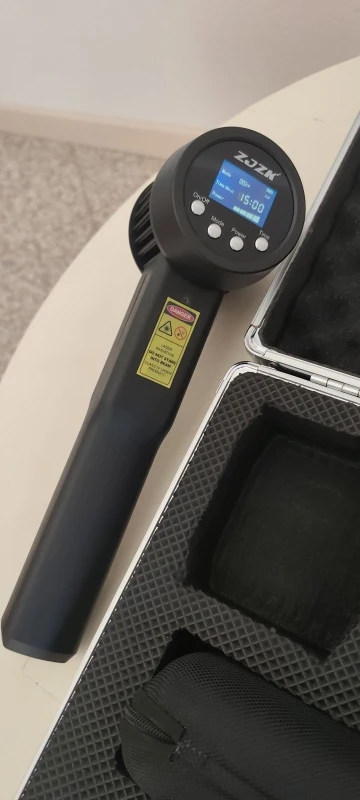
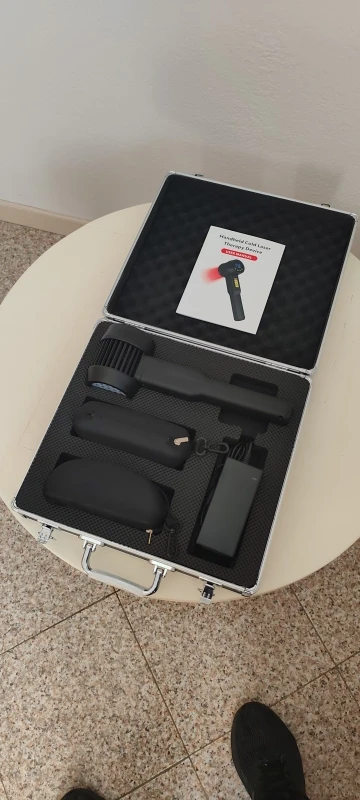
Shoulder tendonitis—whether affecting the supraspinatus or biceps tendon—can turn everyday movements into painful struggles. Lifting your arm, reaching for a shelf, or even sleeping comfortably becomes a challenge, and traditional treatments like painkillers often only offer temporary relief. But what if there's a non-invasive, drug-free solution that targets the root of the pain? A landmark 1989 clinical trial published in Scandinavian Journal of Rheumatology sheds light on the effectiveness of low-power laser therapy (LPLT) for shoulder tendonitis, offering hope for long-lasting relief.
In this randomized controlled trial, researchers recruited 30 patients diagnosed with either supraspinatus or bicipital tendonitis—two of the most common types of shoulder tendon inflammation. Participants were split into three groups:
-
Active laser therapy: Received infrared laser treatments at 904 nm, administered three times a week for two weeks.
-
Dummy laser (placebo): Underwent the same treatment routine but with an inactive laser.
-
Drug treatment: Took naproxen sodium, a common non-steroidal anti-inflammatory drug (NSAID) for pain and inflammation.
The study measured both objective and subjective outcomes. Objectively, researchers tracked maximum active shoulder movements: extension, flexion, and abduction. Subjectively, patients rated their pain, stiffness, range of movement, and overall function before and after the two-week treatment period.
The results were striking:
- Active laser therapy outperformed the placebo in all seven assessments, showing significant improvements in both movement and comfort.
- Compared to naproxen sodium, the laser therapy delivered better results for objective movement measures (extension, flexion, abduction) and pain relief.
- Naproxen only showed significant improvements in movement and function when compared to the placebo—not in pain reduction or objective mobility gains.
These findings confirmed what many clinicians now recognize: low-power laser therapy is a more effective option than NSAIDs for addressing both the symptoms and functional limitations of shoulder tendonitis.
Low-power laser therapy (also known as low-level laser therapy, LLLT) works through a process called photobiomodulation. Unlike high-power surgical lasers that cut or ablate tissue, the 904 nm infrared wavelength used in the study penetrates deep into the shoulder's soft tissues without causing heat or damage.
Here's the science behind its effectiveness:
-
Reduces inflammation: The laser's energy targets inflamed tendon tissue, suppressing pro-inflammatory molecules and calming swelling.
-
Stimulates healing: It boosts mitochondrial activity in cells, increasing ATP production (the cell's energy source) to accelerate tissue repair and regeneration of damaged tendon fibers.
-
Blocks pain signals: By targeting nerve endings, the laser reduces the transmission of pain signals to the brain, providing immediate and long-lasting relief.
-
Improves blood flow: Enhanced circulation delivers more oxygen and nutrients to the injured tendon, supporting faster recovery.
For shoulder tendonitis, this means the therapy doesn't just mask pain (like NSAIDs often do)—it addresses the underlying inflammation and promotes healing, restoring full range of motion and function.
Shoulder tendonitis patients often face a frustrating cycle of temporary fixes. NSAIDs can cause stomach irritation, kidney issues, or cardiovascular risks with long-term use, and they don't address tendon damage. Physical therapy can help, but it may take months to see results. Corticosteroid injections offer quick relief but can weaken tendons over time, increasing the risk of rupture.
Low-power laser therapy stands out for several key reasons:
-
Non-invasive: No needles, incisions, or downtime—treatments are quick (typically 5–10 minutes) and painless.
-
Drug-free: Avoids the side effects of NSAIDs or steroids, making it safe for long-term use if needed.
-
Targets root causes: Heals damaged tissue and reduces inflammation, rather than just relieving symptoms.
-
Fast results: The 1989 study showed significant improvements in just two weeks—faster than many traditional therapies.
Low-power laser therapy is ideal for anyone struggling with shoulder tendonitis, including:
- Athletes (especially those in sports requiring repetitive shoulder movements, like tennis, baseball, or swimming).
- Office workers or manual laborers who perform repetitive tasks (typing, lifting, reaching) that strain the shoulder.
- Older adults dealing with age-related tendon degeneration or post-injury inflammation.
- Patients who can’t tolerate NSAIDs or steroids due to health conditions.
It's important to note that laser therapy works best for acute or subacute tendonitis (inflammation lasting weeks to a few months). For chronic cases or complete tendon tears, it may be used as an adjunct therapy alongside other treatments like physical therapy or surgery.
If you're considering low-power laser therapy for shoulder tendonitis:
-
Consult a professional: Look for a physical therapist, rheumatologist, or sports medicine specialist trained in laser therapy. They’ll assess your condition to ensure it's a good fit.
-
Treatment schedule: Typically, sessions are 2–3 times a week for 2–4 weeks, depending on the severity of your tendonitis. Each session targets the inflamed tendon directly, with the laser held a few centimeters from the skin.
-
No downtime: You can return to your daily activities immediately after treatment. Some patients report mild warmth or tingling during the session, but this is temporary and painless.
-
Long-term results: Unlike NSAIDs, which require ongoing use to maintain relief, laser therapy's effects persist after treatment ends as the tendon heals.
Shoulder tendonitis doesn't have to limit your mobility or quality of life. The 1989 clinical trial's findings—backed by decades of subsequent research—prove that low-power laser therapy is a safe, effective alternative to drugs for treating tendonitis. By reducing inflammation, stimulating healing, and relieving pain, it addresses the root of the problem, helping you regain full shoulder function without side effects or downtime.
If you're tired of relying on painkillers or struggling with limited movement, talk to your healthcare provider about low-power laser therapy. It could be the solution that gets you back to pain-free living—whether you’re hitting the gym, working, or simply enjoying everyday activities.
References:England S, Farrell AJ, Coppock JS, Struthers G, Bacon PA. Low power laser therapy of shoulder tendonitis. Scand J Rheumatol. 1989;18(6):427-31. doi: 10.3109/03009748909102106. PMID: 2694356.